
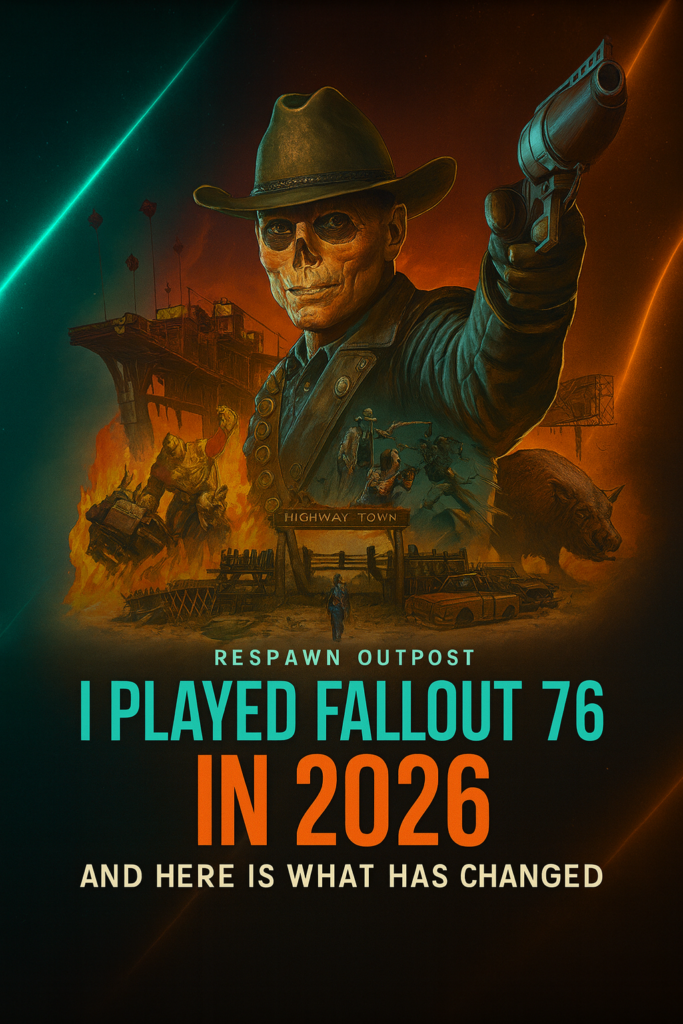
As a long time Fallout fan, the release of Season 2 on Prime Video did something dangerous to me… it brought back that familiar itch, the one that makes you want to drop everything and disappear into the wasteland for a few hours. With Fallout 76 rolling out its latest content drop, the Burning Springs update, it felt like the game was calling my name. The addition of a new region based on southern Ohio, along with a full set of bounty hunt missions tied to The Ghoul from the show, gave me the push I needed to return. So I went back in, years after I thought I was done with it, just to see what had changed.
What surprised me most is that Fallout 76 in 2026 is not the same confused experiment it launched as. It is still rough in places, still unmistakably Fallout in all the ways that make the series both charming and frustrating, but it has grown into something that finally feels like it knows what it wants to be. The first thing that hits you is how alive Appalachia feels now. When the game launched, the world felt like a museum. Beautiful, but empty. Now it feels like a place that has been lived in, fought over, rebuilt, and broken again. Towns have people in them. Factions move around. Random encounters actually happen. You can walk into a settlement and see characters going about their lives instead of reading a terminal that explains why they are not there. It is still not as reactive as a single player Fallout game, but it no longer feels like a world waiting for someone to turn the lights on.
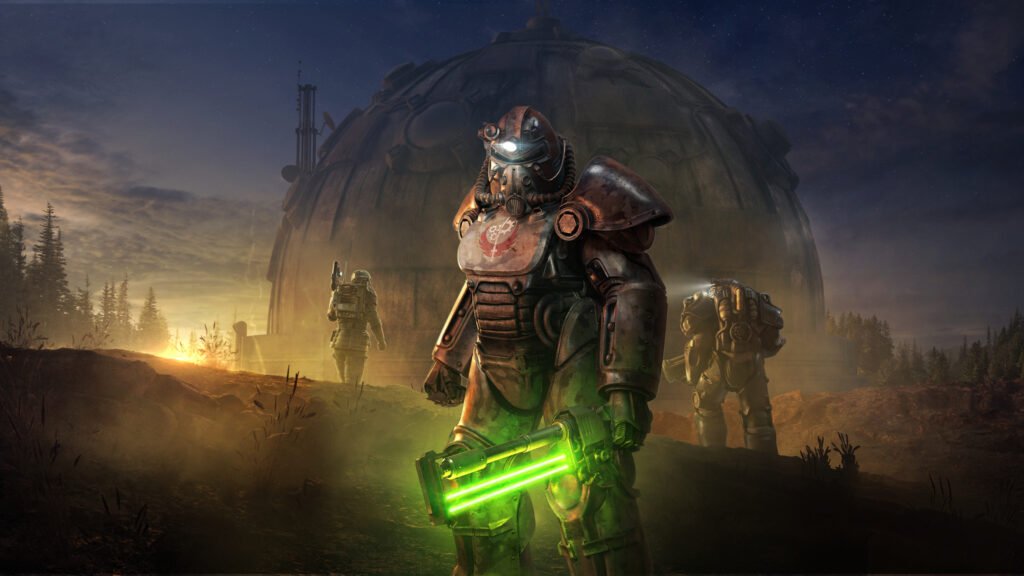
The story has also found its footing. The early game was basically a long scavenger hunt through abandoned buildings, and it never felt like it was building toward anything. Over the years the game has been shaped by a steady stream of major updates that finally give it a sense of direction. Wastelanders brought back human NPCs and gave the world a pulse again. Steel Dawn and Steel Reign added a full Brotherhood of Steel storyline that gave Appalachia a sense of purpose. The Pitt expanded the game beyond the main map and brought back a fan favourite location with new missions and new enemies. Atlantic City pushed the world outward again with its own factions and atmosphere. Seasonal events, scoreboards, and constant quality of life improvements have kept the game moving, while loadout systems, camp upgrades, stash increases, and perk changes have made it far more playable than it was at launch. The Burning Springs update continues that trend by opening up a new slice of Ohio, complete with its own tone and threats, and the bounty hunt missions tied to The Ghoul give returning players something fresh to chase.
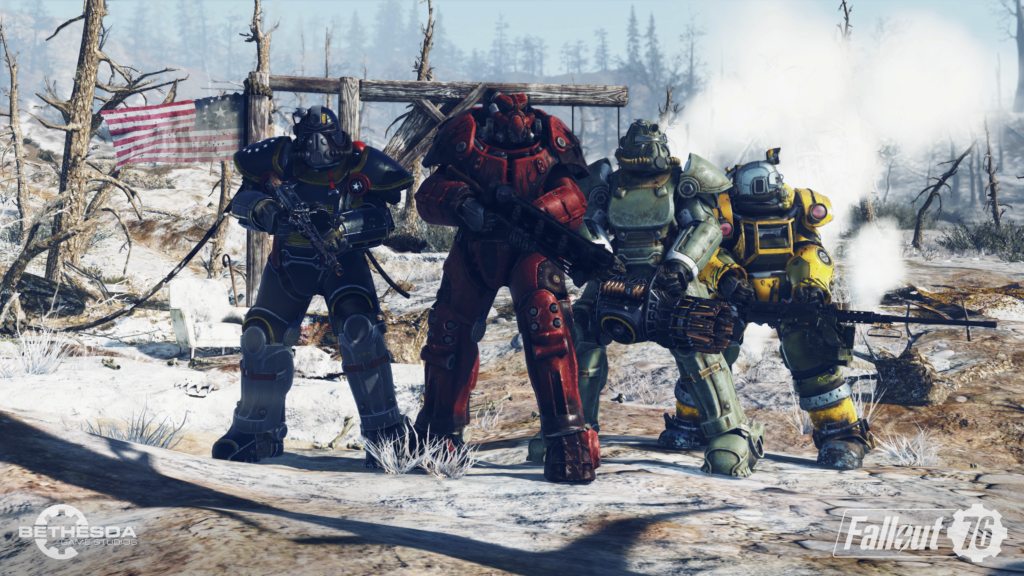
Combat has improved too, although it still carries that familiar Fallout wobble. Gunplay feels smoother, enemies behave a little more intelligently, and the constant bullet sponge problem has been toned down. But it is still Fallout 76, which means you will occasionally shoot something point blank and watch the hit register a second later. VATS works, but it never feels as sharp as it does in the single player games. Melee builds are fun but unpredictable. It is better, but it is not perfect. And yes, the bugs are still here. During my return I ran into a particularly annoying one where, after changing my character’s appearance, my entire screen went black. The UI was still there, the audio was still playing, but the world had vanished. I had to reset the game to fix it. It was not game breaking, but it was a reminder that Fallout 76 will probably always have a little chaos baked into its DNA.
What really defines Fallout 76 in 2026 is the end game loop. This is where the game feels most alive. Public events fire off constantly, and most servers feel like they are always a few minutes away from another chaotic fight. Region wide bosses, seasonal events, expeditions, and daily ops all blend together into a rhythm that keeps you moving from one activity to the next. It is messy, loud, and strangely addictive. You can log in planning to do one thing and end up spending an hour bouncing between events with a group of strangers who feel like they have been playing together for years. If you enjoy that loop, the game has endless life. If you do not, the rest of the experience can still feel a little thin, but the loop itself is easily the strongest part of the game now.
The community remains one of the most surprising strengths of Fallout 76. It has always been a strangely wholesome corner of online gaming, and that has not changed. New players get showered with gear. Camps have become full blown art projects. People will drag you into events you did not even know existed. There is a sense of shared ownership over the world. Players build it, decorate it, shape it, and welcome newcomers into it. Even when the game stumbles, the community keeps it standing.
So is Fallout 76 worth playing in 2026. Surprisingly, yes. It is not Fallout 5 and it is not trying to be. What it has become is a solid co op Fallout sandbox with a warm community and a world that finally feels alive. It is still a little janky, still a little grindy, but it is also a genuinely enjoyable place to spend time in. And with the show bringing new players in, the game feels more active now than it has in years.
If you want more reviews, news, and deep dives into the games you love, check out the rest of Respawn Outpost. We cover everything from the biggest releases to the strange little corners of gaming that deserve more attention. There is always something new to explore.